Get the digest by email. One short email on Mondays.
Issue No. 11 · Week of November 23
Beverly Meeting Digest
Covering November 16 to November 22, 2026 · Independent, not a City of Beverly publication
A year ago the city forecast a $7.1 million gap in its FY2028 budget, which starts next July. This week the Council's budget analyst put it at $1.63 million and walked through what changed. Waring School's plan for four homes at 38 Standley St, which would take down a house dating to about 1700, drew calls to save it, including a letter from two councilors. The school budget is on track so far, bolstered by $837,000 in extra state special education money, while the School Committee put off its e-bike vote. And the Planning Board closed the hearing on 37 Enon St, with a vote set for December 15.
What happened November 16 to November 22
The FY2028 budget gap: $1.63 million, down from last December's $7.1 million forecast
Financial Forecast Committee · Tuesday, November 17
Gerry Perry walks through how the gap closedFinancial Forecast Committee, Nov 17 · from 19:09How the budget year works. Beverly's budget year, or fiscal year, runs from July 1 to June 30 and takes the name of the year it ends in. The current one, FY2027, runs from July 1, 2026 to June 30, 2027. It started with a balanced budget: the Council closed its projected gap in June. 13:08 Each fall the Financial Forecast Committee looks one year ahead, to FY2028, which starts July 1, 2027, and estimates the gap the Mayor will have to close before presenting the FY2028 budget to the Council in June 2027.
The new estimate. That gap is now $1,628,672, the Council's budget analyst, Gerry Perry, told the committee. It is up from the $1.56 million councilors cited November 9, because the bill from the regional vocational school came in higher. 21:56 Issue 10: the $1.56 million estimate
Why it isn't $7.1 million. Last December's forecast put the FY2028 gap at $7.1 million (p. 11). That forecast stacks each year's unclosed gap onto the next, so its $7.1 million was built on FY2027's own forecast gap of $3.9 million. That gap arrived as predicted, and the FY2027 budget, passed in June, closed it. 19:46
Perry then walked through what has changed for FY2028 since last December, about $5.5 million in all. He measures each change by its effect on the FY2028 budget, so these figures don't match FY2027's $3.9 million dollar for dollar:
Perry's figures, Financial Forecast Committee, Nov 17, and the Dec 2025 forecast (p. 11). The higher-cost line is the digest's arithmetic: the amount that takes Perry's figures to his $1,628,672 total.
- Decisions in the FY2027 budget (about $4.16 million): The trash fee increase as proposed by the Mayor and modified by the Council ($2,407,096) and department cuts of 18.82 full-time positions affecting 26 employees ($1,750,711). 23:07
- Revenue that beat last December's estimates (about $2.18 million): State aid came in $1,480,060 above projections, and new growth (taxes from new construction and newly taxable property) hit $1.95 million against the $1.25 million assumed ($700,000). 22:30
- Higher cost estimates, adding back about $860,000: Health insurance, state assessments and the vocational school went up; retirement costs went down. The net is the digest's arithmetic from Perry's totals. 25:24
Perry said $1.63 million is about 16 or 17 employees at about $100,000 each with benefits, and it “does not restore any of those 18 employees” cut in the FY2027 budget. 2:04:49
What the number leaves out. New union contracts: the city's agreements end June 30, 2027, and the forecast assumes 3% raises. It also leaves out a final pension figure; keeping that payment level at about $15 million depends on a state letter due in December or January. 42:59
The FEMA appeal. During COVID, the city billed FEMA for costs it expected to be reimbursed, mostly public safety: police who went with health inspectors to check masks and distancing in stores, and covering the shifts of police and firefighters who had symptoms. FEMA turned down about $1.2 million. The city's appeal was heard late this summer, and a decision is expected soon; the Mayor briefs the Council on Monday. 31:49
Beverly isn't alone. FEMA turned down Holyoke's final appeal over about $218,000 in COVID-era costs in May (FEMA), and Chelsea is appealing a $3.2 million denial for food distribution (Chelsea Record). Since September 2020, FEMA's pandemic rules have covered police and security costs only when they supported a short list of eligible work, such as medical care, food and shelter (FEMA policy).
If the city loses, Perry said the money must come from one of two reserves: free cash (money left over when a year's books close; this fall's amount is down $1.5 million and already set aside for roads and sidewalks) or the stabilization fund, which he likened to a savings account. The Mayor said he has committed to the state to ask the Council for a stabilization transfer, which takes six of nine votes. 35:04 The two reserves together are about 17% of the operating budget, within the city's policy of 13 to 23%, the Mayor said.
The bill after that: school roofs. Six elementary schools have roofs and heating systems near the end of their life, the committee heard. They were renovated one a year starting with McKeown in 1998, so they are coming due together, and Centerville's roof is in the worst shape. Perry said some of those roofs could cost as much as $15 million each. 1:42:59
Paying for projects that size usually means borrowing. The city spends about 4.8% of its budget on debt payments, Perry said, down from where it was about ten years ago. His own view is that it should be closer to 7%, though he acknowledged that money would come out of day-to-day services, and he worries there won't be room to borrow for the roofs and heating systems in the next three to five years. The state School Building Authority can pay a share of school repairs, and the superintendent plans to apply (see story 3). 1:39:43
Where the Deficit Reduction Committee fits. None of its ideas is in the $1.63 million. In October members sorted them by timing. Some could take effect within about a year: changing how much of health premiums the city pays for its workers and retirees, a different health plan, higher parking rates and new meters, and program fees. Others would take longer. Issue 7: the ideas, by timing
Changing the employee premium share has to be negotiated with the unions, whose contracts end as FY2028 begins. Members plan to bring their ideas to the full Council in January; the bigger ones (zoning, new growth, an override, selling city property) moved to late winter or spring (agenda). The Mayor builds the FY2028 budget over the spring and presents it in June. And new growth is certified by the state each fall, so “you're not going to know until next September what next year's growth is,” Perry said. 52:08
Waring School's plan for 38 Standley St would take down a house from about 1700
Planning Board · Tuesday, November 17 · OSRD site plan #13-25, Ward 6
Waring's engineer on the cost of restoring the housePlanning Board, Nov 17 · from 2:16:22Waring School wants to divide its 4.38-acre lot at 38 Standley St, take down the house and outbuildings, and build four single-family homes facing Standley St. About 2.2 acres would stay open space next to more than 50 acres of city land. The plan uses the city's open space residential design rules (OSRD), which cluster homes in exchange for protected land. 1:59:48
The house. It is a First Period house, meaning one built before 1725. The Historic District Commission's chair, Bill Finch, has said its core was probably built between 1700 and 1720 (Beverly Beat). Harvard zoologist Harold Jefferson Coolidge and his wife moved in in 1976 and added on to it; the property later went to Waring, and the house has been empty and unheated for more than ten years (Salem News). An early 1800s shoe shop, known as a “ten-footer,” stands on the lot. 2:05:11
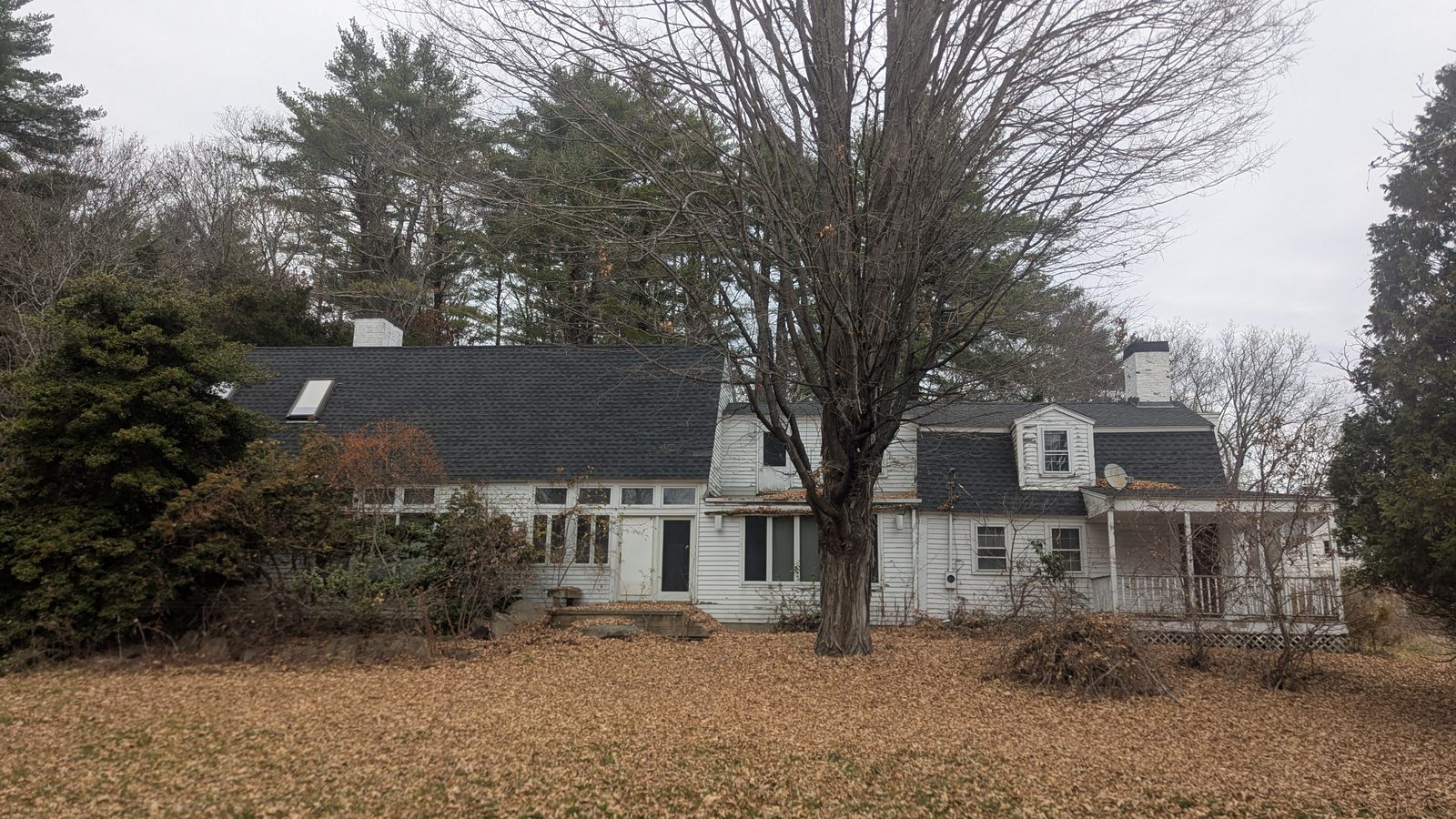
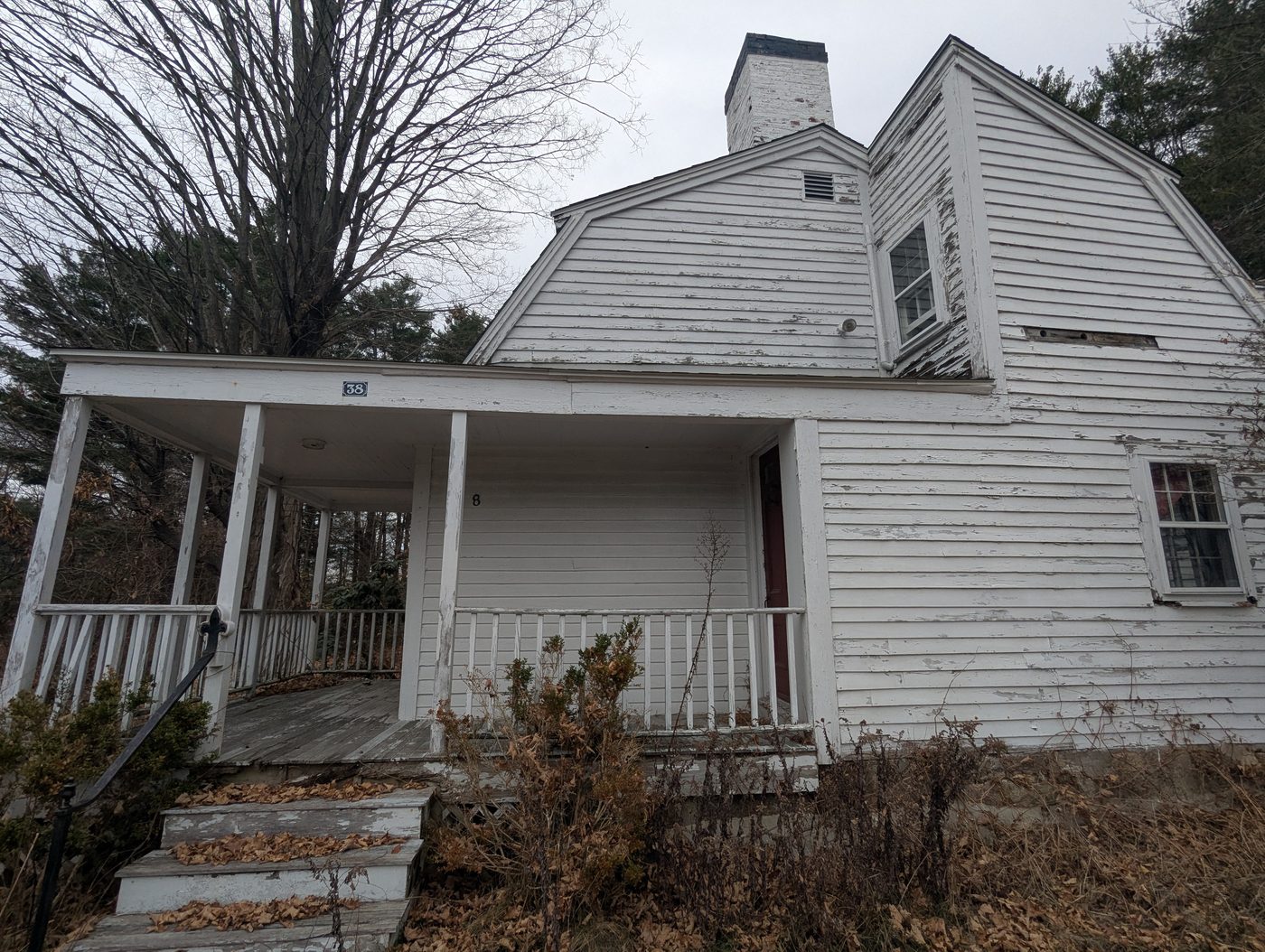
The delay. In January the commission voted unanimously to declare the house and the shoe shop historically significant, which delays demolition by one year (Salem News, January).
Waring's case. A restoration contractor put the work at more than $3 million to make the house livable, Waring's engineer said, and with costs that estimate leaves out, such as mold, pests and possible asbestos, “it's easily a $3.5 million project.” Waring “doesn't have $3 million of slop in its budget,” he said. The school is still open to a reasonable offer and would move the shoe shop to its campus. 2:16:58
Calls to keep it. The board received a letter ahead of the meeting from Councilors Matt St. Hilaire (Ward 6) and Scott Houseman (Ward 4) asking it to find a way to preserve the house. 2:20:28
Two board members of Historic Beverly, speaking for themselves, showed an alternative that keeps the house while still creating four lots to sell. They said their builders' figures were well under $3 million. Neither estimate has been made public. 2:30:27
What the board can do. The chair said he “was not aware” of the house's history when the board backed the current layout earlier in the process, and noted that the board's legal powers have limits. 2:36:48 The board chose that layout in the spring of 2025, before the commission's January vote. The commission wasn't consulted then and wasn't required to be, Planning Director Darlene Wynne told the Salem News.
Next. Members asked to see Waring's contractor estimate and the alternative plan. City departments have until about December 3 to comment, and the board can't act before then. The city has also asked the Historic District Commission to review the plan at its December 9 meeting (Salem News). The hearing continues December 15. 2:39:26
The school budget is on track so far, with $837,000 more in state special education money than planned
School Committee, Finance and Facilities · Wednesday, November 18
Almost five months into the school budget year, which runs July to June, revenue is “running right on target,” the district's interim finance director, Joan Liporto, told the School Committee's finance subcommittee at its monthly review. On spending, “I don't see any areas yet in November where I would be concerned.” 26:01
$837,000 more from the state. The state's “circuit breaker” program pays back part of what a district spent the year before on its costliest special education services, mostly tuition at outside schools and the buses to get there (DESE). Beverly budgeted $3,822,975 (p. 9) and now expects about $4.6 million, about 22% more. Part of the jump is higher transportation costs being reimbursed. 16:09
Not something to count on. The amount depends on what the Legislature puts into the program each year. For FY2027, lawmakers added $152 million in one-time money (MASC). Two years ago the state covered only 44% of the transportation costs Beverly expected, according to the city forecast committee's December 2024 minutes.
What it's for. The money stays in a special education account. Beverly has used each year's reimbursement toward the following year's special education tuition, which lowers what the school budget needs. Whether this extra reimbursement will ease the FY2028 school budget (and, in turn, help close the city's $1.63 million gap) didn't come up. The schools present their FY2028 numbers to the Financial Forecast Committee on November 30.
Going the other way: electricity. Solar credits that used to cover part of the high school's electric bills ended, so that line is already over budget. The city is paying those bills in FY2027 from a one-time solar payout, but the FY2028 budget will have to plan for the full cost, Liporto said. 24:02
The roofs. The superintendent plans to apply this winter to the state School Building Authority's repair program, which shares the cost of roofs, windows, doors and heating. He would start with Centerville, whose roof is in the worst shape of the six elementary schools needing replacement (see story 1), and look at the district's other needs. Applying takes School Committee and Council votes. 28:13
The School Committee puts off its e-bike vote
School Committee · Wednesday, November 18 · Policy JLIDA
Why the committee held offSchool Committee, Nov 18 · from 2:29:39The School Committee was set to take its final vote on rules for e-bikes, scooters and similar devices on school property. Instead it voted 7-0 to table the policy “until our next meeting.” Nothing is in effect. 2:45:54 Issue 8: the first reading
Why. Members gave three reasons.
- Two members were absent, and one had told the chair, Lorinda Visnick, that she heard from several constituents about the policy. 2:29:39
- The draft treats every device the same. As written, the policy bars electric or motorized bikes, scooters, skateboards, hoverboards and similar devices anywhere on school property, from parking lots to bus loops, with exemptions for disability devices, police, on-duty staff and approved school activities (p. 21). Mayor Cahill said it does not separate pedal-assist bikes from throttle bikes. 2:32:48
- Three drafts were in circulation. The version in the packet differed from the one a subcommittee approved. “How did that happen?” the chair asked. 2:34:53
What's next. Frost will reconcile the drafts, with input from the city's Bicycle and Pedestrian Advisory Committee and the police. Superintendent Peter Cushing will post the updated draft on the district's Facebook page and in his weekly memo, with a feedback form shared with members. 2:30:20
Nearby. Danvers' School Committee voted November 9 to allow ordinary bikes and pedal-assist e-bikes, provided riders walk them on school grounds, while banning throttle e-bikes, motorized scooters and similar devices, the Salem News reported. Haverhill banned e-bikes and e-scooters from school property outright in August, the Eagle-Tribune reported.
37 Enon St: the hearing closes, and a vote is set for December 15
Planning Board · Tuesday, November 17 · Ward 5
The Planning Board closed its public hearing on the plan for 179 apartments at 37 Enon St, the Stop & Shop site, on a 7-0 roll call. The board's chair said his “strong intention” is to vote at the next meeting, December 15, after hearing from the Clean Energy Advisory Committee. 1:45:02 That committee had the project on its November 19 agenda (p. 1); nothing from the meeting has been posted yet. Issue 8: the October hearing
What's new. Both advisory boards recommended approval. 6:30 The Parking and Traffic Commission voted 6-0 with 10 conditions, among them new traffic counts at the driveways while school is in session, and working with the city and the MBTA on moving the 451 bus stop and turnaround (pp. 3-4). The Design Review Board voted 5-0, with five suggestions on roofing, plantings, the dog run and paths that it said “are not conditions of approval” (p. 2).
What to expect. With the hearing closed, there is no more public testimony. The board has 90 days to decide on the special permits (including inclusionary housing) and 65 days for site plan review. 1:46:23
Also at the Conservation Commission, November 17: Endicott College plans to replace about 100 feet of the concrete base under the slope that holds up Hale St, and build a new 175-foot seawall at its Misselwood property, 385 and 407 Hale St, in Ward 6. A site visit is set for November 28 at 8am; the hearing continues December 8. The commission also named Greg Power its representative to the Open Space and Recreation Committee, 5-0. (Agenda)
Commission on Disabilities, November 12: A deaf resident asked again for sign language interpreters at North Shore Music Theatre's A Christmas Carol. The commissioner who has worked on it since May said the city cannot require a private business to provide them, and pointed to state and federal enforcement of the Americans with Disabilities Act. 9:20
Coming up through December 15
- Nov 23City Council: the budget analyst handoff6:00pm special meeting in the Middle School library, 502 Cabot St. Next steps in hiring the Council's budget analyst, and the transition from the current analyst.
- Nov 23City Council: final vote on the data center pause7:00pm in the Middle School library. Register to speak by 9:30am with the City Clerk. Final passage of the data center pause, which needs six of nine votes. The Mayor's update on the FEMA appeal. Hearings on National Grid's underground lines on Woodbury Street (7:30pm) and Dane Street (7:40pm), and on $107,614 in Community Preservation money for the design and permitting of Lynch Park's phase III (7:50pm). Also: 2027 golf and tennis club rates (memberships up $100, greens fees up $2), and setting hearings on how the tax levy is split among property types and on the Mayor's request for $20,000 "to support the City's DEIB and other initiatives within the Executive office."
+ calendar
- Nov 24Zoning Board of Appeals7:00pm in the Police Station community room, 175 Elliott St. Requests include an addition with four apartments on a commercial building at 386 Cabot St, a new three-family house on Gage St, two accessory apartments, and several home additions.
+ calendar
- Nov 28Conservation Commission site visit: Endicott seawall8:00am at low tide, 385 and 407 Hale St.
- Nov 30Financial Forecast Committee6:30pm in the Police Station community room, 175 Elliott St. School and vocational school spending, then a scheduled vote on the forecast numbers.
+ calendar
- Dec 7City Council: the tax rate splitThe assessors' hearing on how the FY2027 tax levy is divided among property types, and on the residential, small business and open space exemptions. The Mayor plans to send the tax rate to the state the Tuesday after.
- Dec 8Conservation CommissionThe golf course permit and the Endicott seawall both return.
- Dec 9Historic District Commission: 38 Standley StThe city has asked the commission to review Waring School's plan for the house.
- Dec 10Financial Forecast Committee6:30pm in the Police Station community room. The last of three meetings.
- Dec 15Planning Board: 37 Enon St and 38 Standley StThe board's chair intends to vote on 37 Enon St. The Waring School hearing on 38 Standley St continues.
Council special meeting notice (p. 1)Council agenda and packet, Nov 23 (p. 1)ZBA notice (p. 1)Forecast Committee notice, Nov 30 (p. 1)Agendas
Get the digest by email
One short email on Mondays: each story's headline, a sentence on what happened, and a link to the full issue. Free, and every email has an unsubscribe link.
Sent through Kit, an email service. Your address is used for the digest and nothing else.
Free to reuse, adapt or republish, no permission needed (CC0). A link back is appreciated, and please keep the links to recordings and documents. Feeds: every issue · every story.